
Last updated November 20, 2026
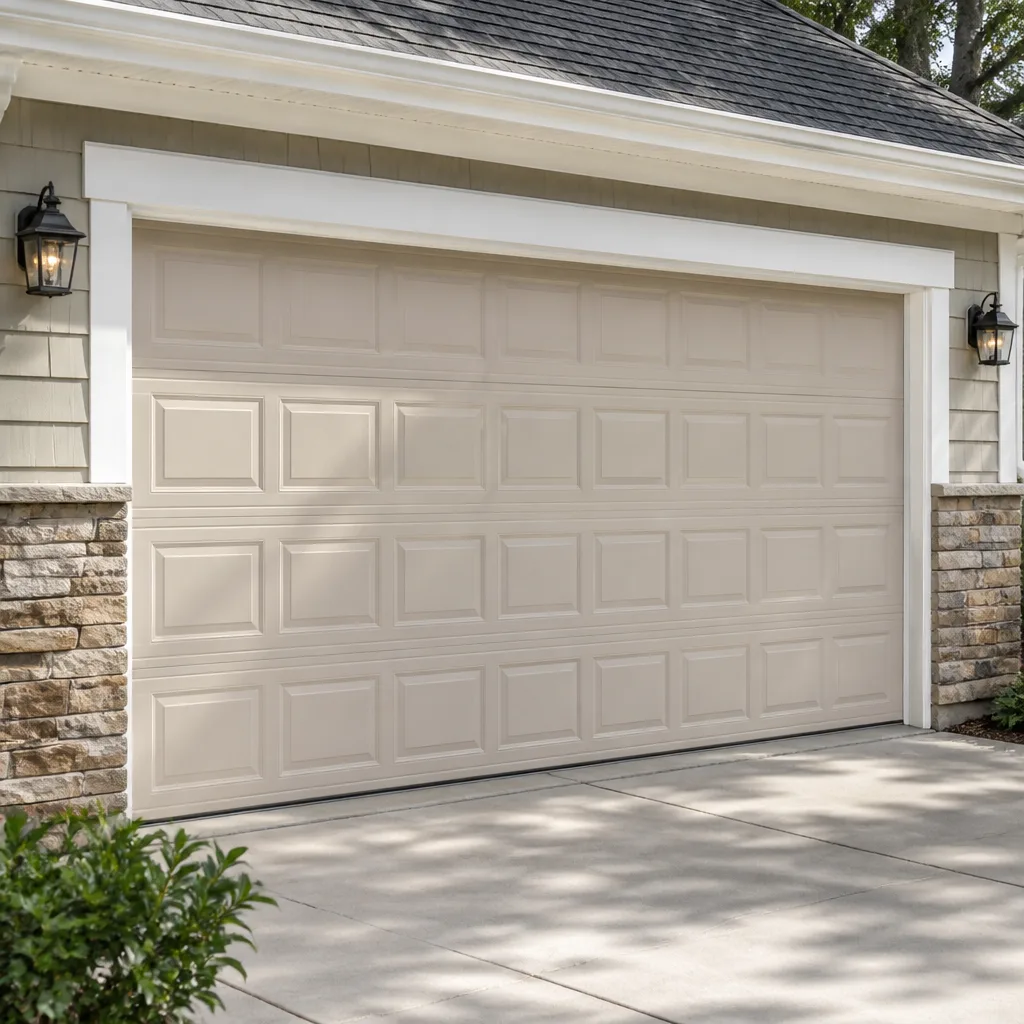 Raised-panel steel
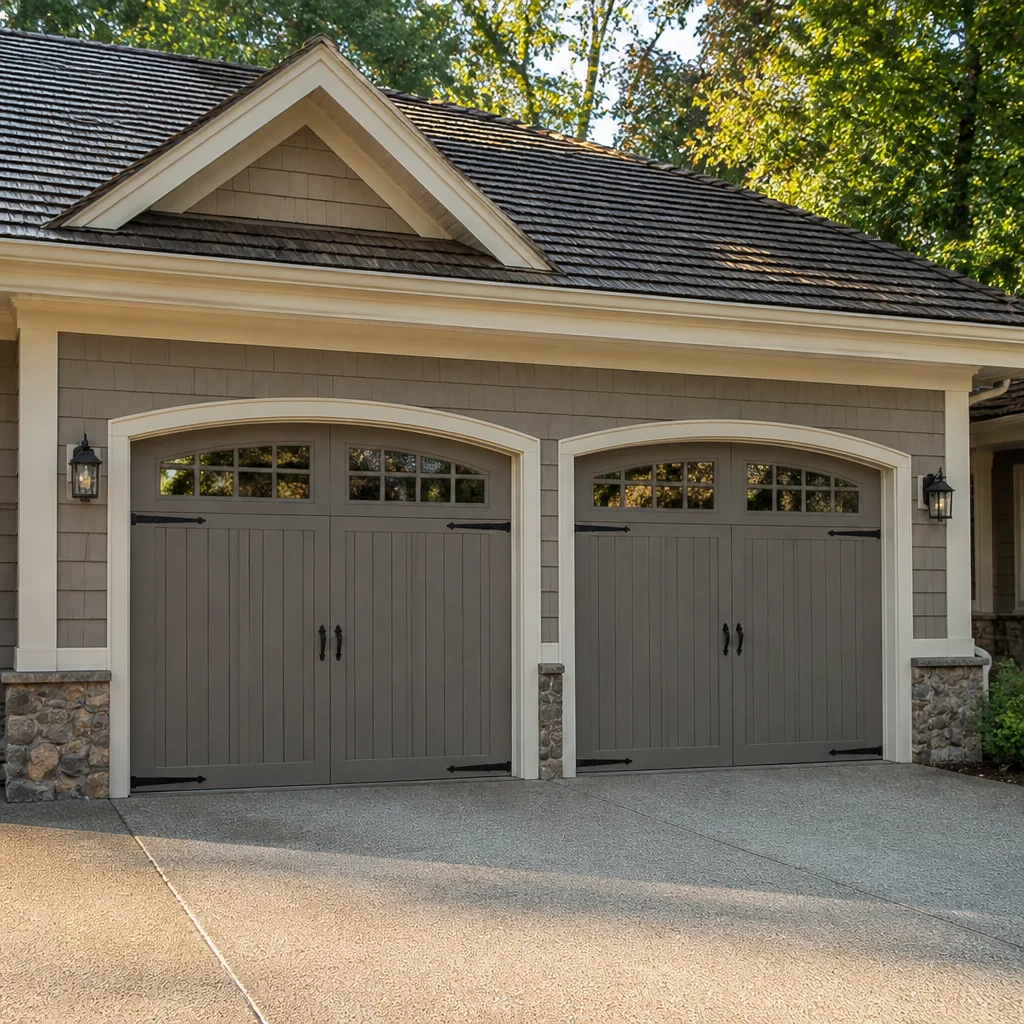 Carriage house
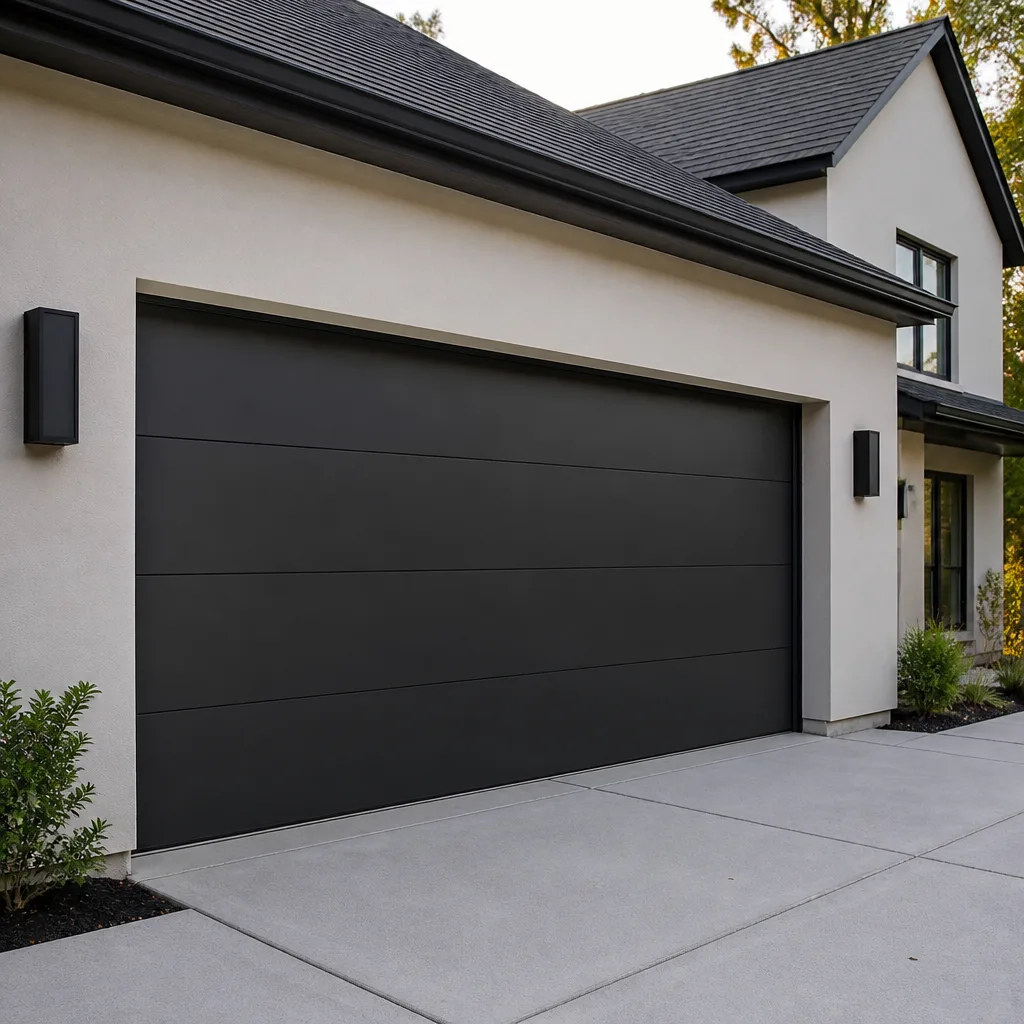 Modern flush
 Full-view glass
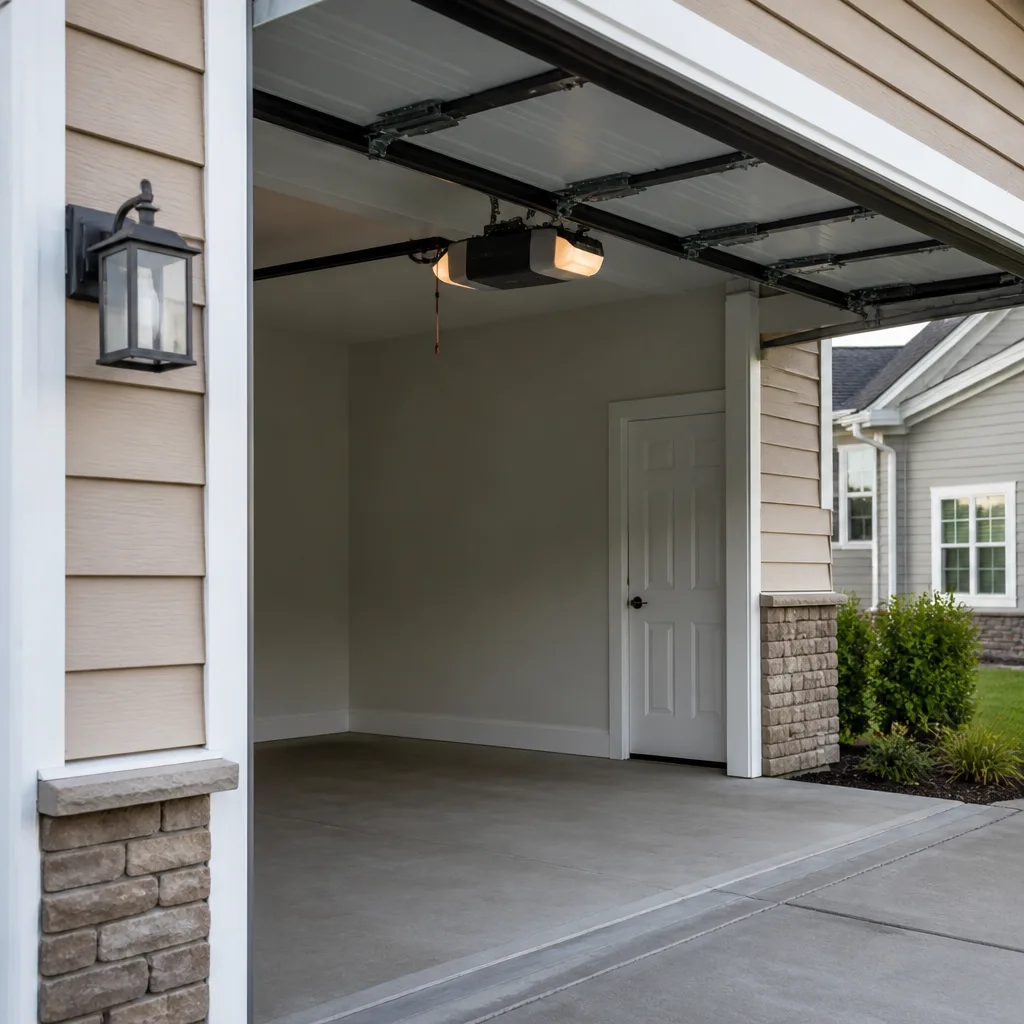 LiftMaster openers
 Chamberlain openers
Full 25-point door and opener safety check with every visit - springs, cables, rollers, tracks, and your LiftMaster or Chamberlain opener included
You get a price before we start. It does not change when the pro arrives.
Get your free estimateGarage Door Warning Signs: A Meridian-Kessler Homeowner’s Reference Guide
Most homeowners judge a garage door by ear. A grinding noise gets attention; a squeak gets a can of spray lubricant; a door that runs a little slower than it used to gets nothing at all. That instinct is backwards. The failures that actually strand a car or drop a door mid-travel almost always announce themselves first as things you can only see: a frayed strand at the cable drum, a bracket pulling away from the jamb, a bottom seal that has stopped touching the floor.
This guide is about those visual tells, written for the housing stock and weather we deal with in Meridian-Kessler. You’ll learn where to look, what normal wear looks like versus what precedes a failure, and how to tell one problem from another without guessing.
Quick Answer
The most important garage door warning signs are visual, not audible: frayed or bird-caged cable strands at the drum, a bottom bracket pulling loose from the jamb, an uneven gap under one side of the door, blinking opener error codes, and a bottom seal that has flattened away from the concrete. Any one of these justifies stopping the door and having it inspected before it’s used again. Sounds matter too, but they usually arrive late, after a mechanical problem has already been developing for a while.
Styles & brands we work with
- Raised-panel steel
- Carriage house
- Modern flush
- Full-view glass
- LiftMaster openers
- Chamberlain openers
Table of Contents
- The Visual Tells That Come Before a Cable Snap
- An Uneven Door Bottom: Broken Spring or Track Problem?
- What Your Opener’s Blinking Light Is Trying to Tell You
- Normal Spring Noise vs. the Creak Before a Fracture
- Weatherstripping, Water, and Meridian-Kessler’s Poured Concrete Floors
- Why a Slower Door Is Rarely an Opener Problem
- A Seasonal Inspection Walkthrough for Meridian-Kessler Homes
- Common Mistakes to Avoid
The Visual Tells That Come Before a Cable Snap
Lift cables are the parts that hold the door’s weight in balance with the springs, and when one lets go the door drops on one side with a bang. The good news is that cables rarely fail without visible warning. You just have to know where to shine a light.
There are five places on the cable drum and bottom bracket worth checking, and they show up in a predictable order as wear progresses.
- Strand separation at the drum. Look at where the cable winds onto the drum above each side of the door. A healthy cable sits as a tight, uniform coil. If individual strands lift away from the bundle, or you can see gaps between them, that’s the earliest sign of fatigue.
- A “bird cage” in the winding. When strands separate badly enough, the cable looks like a loose spring or a bird cage near the drum. At that point the cable is no longer carrying load evenly and should be considered failed, even if the door still opens.
- Flat spots and kinks. A cable that has jumped its track or been pinched can develop a flat spot or a sharp bend. Any kink is a stress concentration, and stress concentrations are where cables break.
- Rust blooming between strands. Surface rust on the outside of a cable is one thing. Rust visible between the strands, especially where the cable meets the drum, means moisture has worked its way inside and the core is degrading.
- Anchor fatigue at the bottom bracket. Look at the bracket bolted to the bottom corner of the door. The cable attaches there, and that bracket takes the full pull of the spring. A bracket that’s pulling away from the jamb, has elongated bolt holes, or shows a hairline crack in the metal is a sign the anchor is giving up.
Cables and springs are both under high tension, and neither is a component to diagnose or adjust by hand. If you see any of the five signs above, stop operating the door and have it looked at by a technician who works with high-tension assemblies. This is one of the areas where a general handyman service will often decline the job, and for good reason: the tooling and the training are specific to this trade. Spring and cable work is a large part of what we do, and it’s worth understanding why that matters before you try to save a service call.
An Uneven Door Bottom: Broken Spring or Track Problem?
A door that sits lower on one side than the other is frequently called a track problem when it isn’t. In most cases an uneven bottom edge means one torsion spring has broken or one extension spring has stretched, and the door is being lifted on one side only.
You can usually tell the difference in about ten seconds. Stand inside the garage and watch the gap between the top of the door and the header as the door starts to close, or watch the bottom edge as it opens.
- If the door lifts faster on one side and then settles crooked: that’s a spring problem. One side has lost its counterbalance.
- If the door runs straight but the gap at the floor is uneven: that’s usually a bottom seal, a bent bottom panel, or a floor that isn’t level. Meridian-Kessler has plenty of old poured concrete garage floors that have settled or cracked over time, so an uneven gap here doesn’t always mean a spring.
- If the door binds and jerks through a particular point in its travel: that’s more often a track or roller issue.
- If the door is visibly bowed in the middle of a panel: that’s panel damage or a binding track, not a spring.
For a torsion setup, listen after the door is fully closed. A torsion system uses two springs, so if one has snapped, the door will feel heavy on one side and the remaining spring will do all the lifting. If you can see a clear gap of several inches between the coils of one spring, that spring has broken.
Don’t try to open the door by hand to test it further. A door with one failed spring is much heavier than it looks, and if the remaining spring or cable is compromised, the door can come down unevenly. Call it in and let a technician confirm which spring has failed before anything else is used.
One practical note on cost: springs are replaced as a single unit, and a matched pair is usually replaced together so the door stays balanced. A single spring is priced as one spring, and a pair costs roughly double that, because it’s two parts. When a technician quotes a spring repair, ask whether the price covers one spring or both, so you know exactly what’s being replaced. Our written estimate always states this before any work begins.
What Your Opener’s Blinking Light Is Trying to Tell You
Modern openers, especially the Chamberlain and LiftMaster units that are so common on Meridian-Kessler doors, don’t fail silently. They flash a diagnostic pattern on the light or the LED before the motor gives out, and most homeowners ignore it until the door stops responding.
The flashing pattern usually corresponds to a fault the opener is trying to report. The most common ones we see cluster around a few categories:
- Safety sensor faults. A rapid flash pattern often means the safety beam is blocked or misaligned. In an older garage this is frequently a sun glare issue at certain times of day, or a sensor knocked out of alignment by a broom handle or a bike.
- Force limit faults. A slower flash or a code sequence on newer units can mean the opener has detected resistance and stopped the door. That resistance is usually mechanical: a stiff roller, a dry hinge, or a binding track. The opener is the messenger, not the problem.
- Travel and limit faults. If the opener loses its travel limits, it may not know where fully open or fully closed is, and it will often refuse to run at all. This can follow a power interruption or a failing logic board.
- Motor or board faults. A long flash sequence after the door stops mid-travel, repeated every time you try, points to a failing motor capacitor or control board.
The exact code depends on the model, so the useful move is to read the opener’s manual or check the label on the back of the unit for the model number, then note the pattern: how many flashes, how fast, and whether it repeats after a pause. That description is enough for a technician to know what they’re walking into, and it’s the kind of thing that garage door opener repair can resolve quickly when the right part is on hand.
We service the eight brands most commonly installed on homes here, including Chamberlain and LiftMaster, so there’s no “we don’t work on that model” response when you give us a model number.
Normal Spring Noise vs. the Creak Before a Fracture
Torsion springs make noise. A well-installed spring still groans a little as it winds and unwinds, and a light, rhythmic creak at a consistent point in the door’s travel is often just the spring doing its job.
What precedes a coil fracture sounds different. Instead of a steady groan, you get a sharp, irregular pop or a metallic snap at one specific point, often followed by a change in how the door balances. It might repeat for days before anything breaks, which is exactly why homeowners dismiss it.
Here’s how to separate the two:
- Listen while the door is stationary. A spring that creaks or clicks when the door isn’t moving has a problem. Springs under load don’t move on their own.
- Note whether the sound is tied to a position. Consistent noise at one point in travel is more likely a drum or cable issue. Noise that appears at random is more likely a spring winding down unevenly.
- Test the door’s weight by hand with the opener disconnected. A balanced door should lift with one hand. If it feels heavy, or falls when you let go halfway up, the spring is losing tension. Do this carefully and stay clear of the door.
- Check the coil for a visible gap. A clean break in a torsion spring shows as a clear space between coils, often with the two broken ends resting apart. That’s a definitive sign.
Springs are the one component on the whole door where the risk to a homeowner trying to work on it is genuinely serious. A wound torsion spring holds enough stored energy to cause severe injury if it’s released without the right winding bars, and extension springs can whip if a safety cable isn’t in place. If you suspect a spring is failing, leave the door down and call. Our technicians have up to 13 years of experience with high-tension assemblies, and this is exactly the kind of work generalist services turn away.
Weatherstripping, Water, and Meridian-Kessler’s Poured Concrete Floors
The bottom seal is the rubber or vinyl strip along the bottom of the door, and it does more than keep drafts out. It’s the barrier that keeps rain and snowmelt from running under the door and across the garage slab.
On older Meridian-Kessler garages, that matters more than it does in newer construction, because many of these floors are original poured concrete. Concrete that has gone through decades of freeze-thaw cycles develops cracks and hairline seams, and those seams give water a path straight under the slab toward anything stored on the floor. A worn bottom seal is often the reason a garage feels damp after a long rain, even when the roof and walls are fine.
Signs the bottom seal needs attention:
- Flattened or torn rubber. Run a hand along the seal (with the door closed and the opener off). If the seal feels hard, flat, or cracked, it’s no longer making contact along its full length.
- Daylight under the door. At night, look for light coming in under the closed door from outside. Any daylight streak is a draft and a water channel.
- Water staining along the inside of the threshold. A dark line or tide mark on the concrete just inside the door means water has been getting in regularly.
- A swollen or soft bottom panel. If the bottom section is a wood composite and it’s absorbing water, the panel itself may need repair, not just the seal.
A bottom seal replacement is a modest repair, and it’s one of the cheapest forms of protection you can give an older concrete floor. If the bottom panel itself is damaged, that’s a separate conversation, and one worth having with a specialist rather than a generalist handyman. Panel repair and parts are part of what we do, and having the parts on hand means a seal or panel fix doesn’t stall waiting on a shipment.
Why a Slower Door Is Rarely an Opener Problem
When a garage door starts moving more slowly, most people assume the opener is wearing out. In our experience, that’s the less common cause. More often, the opener’s force compensation is masking a mechanical drag: a stiff roller, a dry hinge, a slightly bent track, or a door that’s no longer balanced because the spring has lost tension.
Here’s why that matters. Openers are designed to adjust their force output to keep the door moving evenly. When the mechanical resistance rises, the opener pushes harder to compensate, so the door keeps moving and the homeowner notices nothing until the resistance crosses a threshold. At that point the opener’s safety reversal trips, the door stops mid-travel, and the problem looks sudden even though it’s been building for weeks.
The warning signs of that buildup are subtle but visible:
- Uneven speed. The door starts fast and slows at a specific point, or moves smoothly on the way up and hesitates on the way down.
- A slight shudder at the start. If the door shakes when it first moves, the opener is straining against resistance.
- Visible roller wear. Look at the rollers where they ride in the track. A roller with a flat spot or a worn bearing is a common source of drag.
- Dry hinges and a stiff track. Hinges that haven’t been lubricated in a long time and tracks with visible dirt or rust are both drag sources.
- A door that needs help to close. If you have to nudge it, the balance is off, and the opener is working harder than it should.
If you notice any of these, it’s worth having the door serviced before the opener burns out its motor trying to compensate. A slow door is a cheap fix while it’s still slow. Once the reversal trips, it’s often a bigger repair.
A Seasonal Inspection Walkthrough for Meridian-Kessler Homes
You don’t need tools to do most of this check, and it takes about ten minutes. The idea is to build the visual habit so you catch wear while it’s still minor.
- Start with the door closed and the opener unplugged. Never inspect a moving door.
- Look at the cable drums above each side. Check for strand separation, bird-caging, kinks, and rust between strands.
- Check the bottom brackets. Look for bolts that have pulled loose, elongated holes, or hairline cracks in the bracket.
- Look at the spring coils. Check for a visible gap between coils, which indicates a break.
- Inspect the rollers and hinges. Look for flat spots, worn bearings, and rust on the hinge pins.
- Run a hand along the bottom seal. Check for flattening, cracking, or tears.
- Look for light under the closed door at night. Daylight means a draft and a water entry point.
- Watch the opener’s diagnostic light the next time you run the door, and note any flashing pattern you don’t recognize.
In Meridian-Kessler, spring and seal checks are worth doing twice a year: once as the weather warms and once before cold weather sets in. Temperature swings are hard on rubber seals and on spring steel, and the swings here are wide enough that a door that passed a spring check in April can be showing new wear by October.
If you find anything you’re not sure about, a free estimate is the fastest way to get a straight answer. For a full system look at the door itself, garage door repair is where we start, and for a door that’s beyond repair, garage door installation is the next step.
Common Mistakes to Avoid
- Waiting for a noise. Noise is a late-stage signal. The visual signs we’ve covered generally appear days or weeks before you hear anything, so build the visual check into your routine instead of relying on your ears.
- Calling a slow door an opener problem. A slow door is usually a balance or drag issue. Replacing the opener without fixing the mechanical cause just burns out the new motor faster.
- Treating an uneven bottom as a track problem. In most cases it’s a spring. Adjusting the track to compensate makes the situation worse, and it’s a job that should be diagnosed correctly before anything is moved.
- Ignoring a blinking light. The opener is telling you something. Note the pattern and the model number instead of clearing the fault by cycling the power.
- Trying to lubricate or adjust a spring yourself. Springs are under high tension. This is the one part of the door where the risk of serious injury is real, and it’s why so many general handyman services won’t touch them.
- Leaving a worn bottom seal in place through a wet season. In Meridian-Kessler’s older poured concrete garages, a worn seal channels water straight under the slab. A seal replacement is a small repair that prevents a much bigger moisture problem.
- Letting a generalist diagnose a brand-specific fault. A Chamberlain or LiftMaster error pattern, or a part for a Clopay or Amarr door, is often specific to the brand. A specialist who works across the major brands knows what the fault means before arriving.
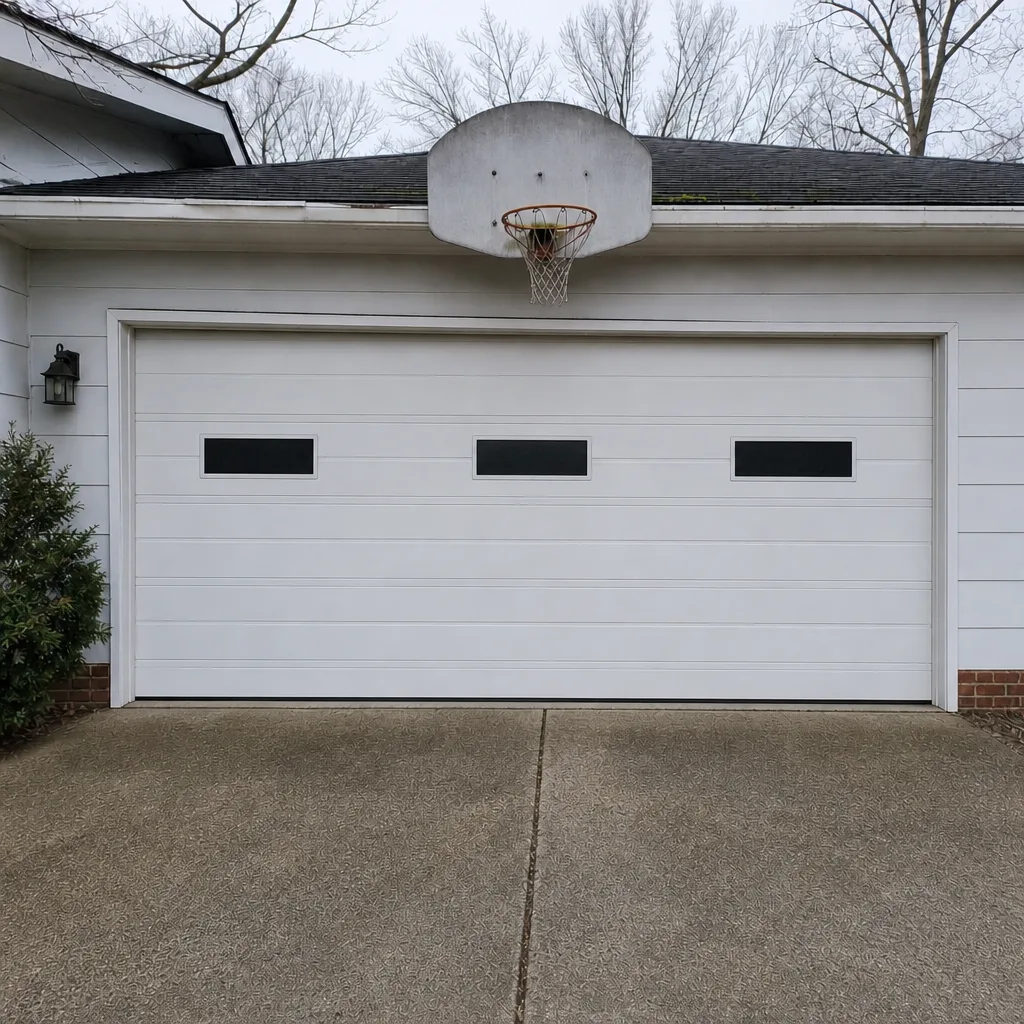
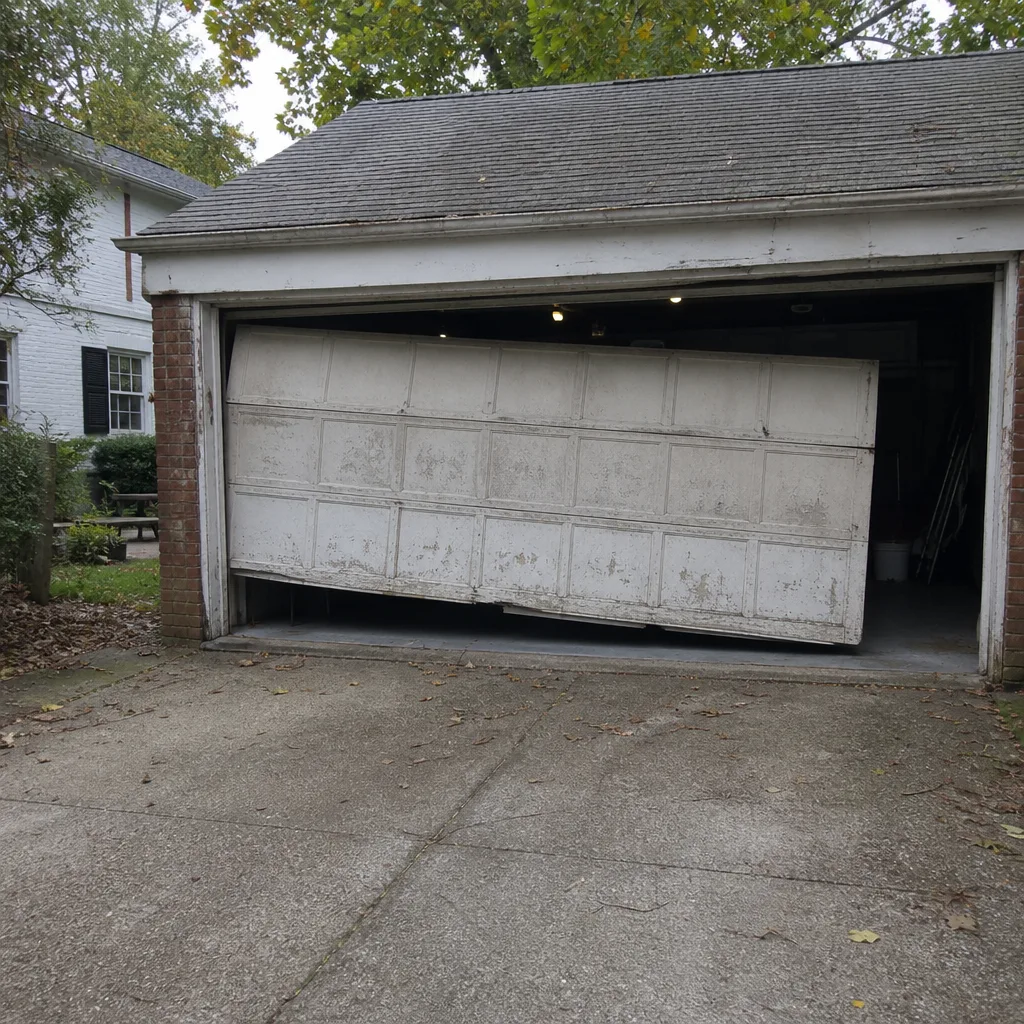
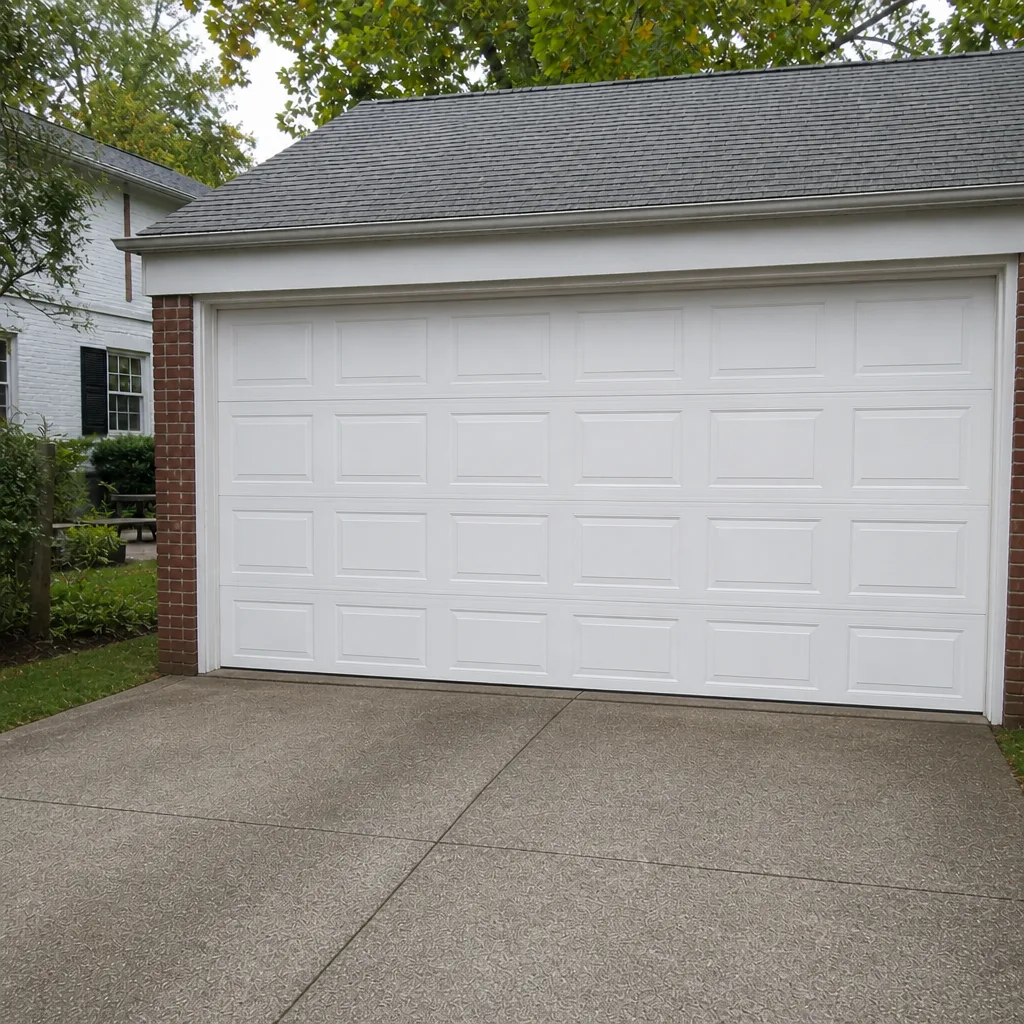
See the difference
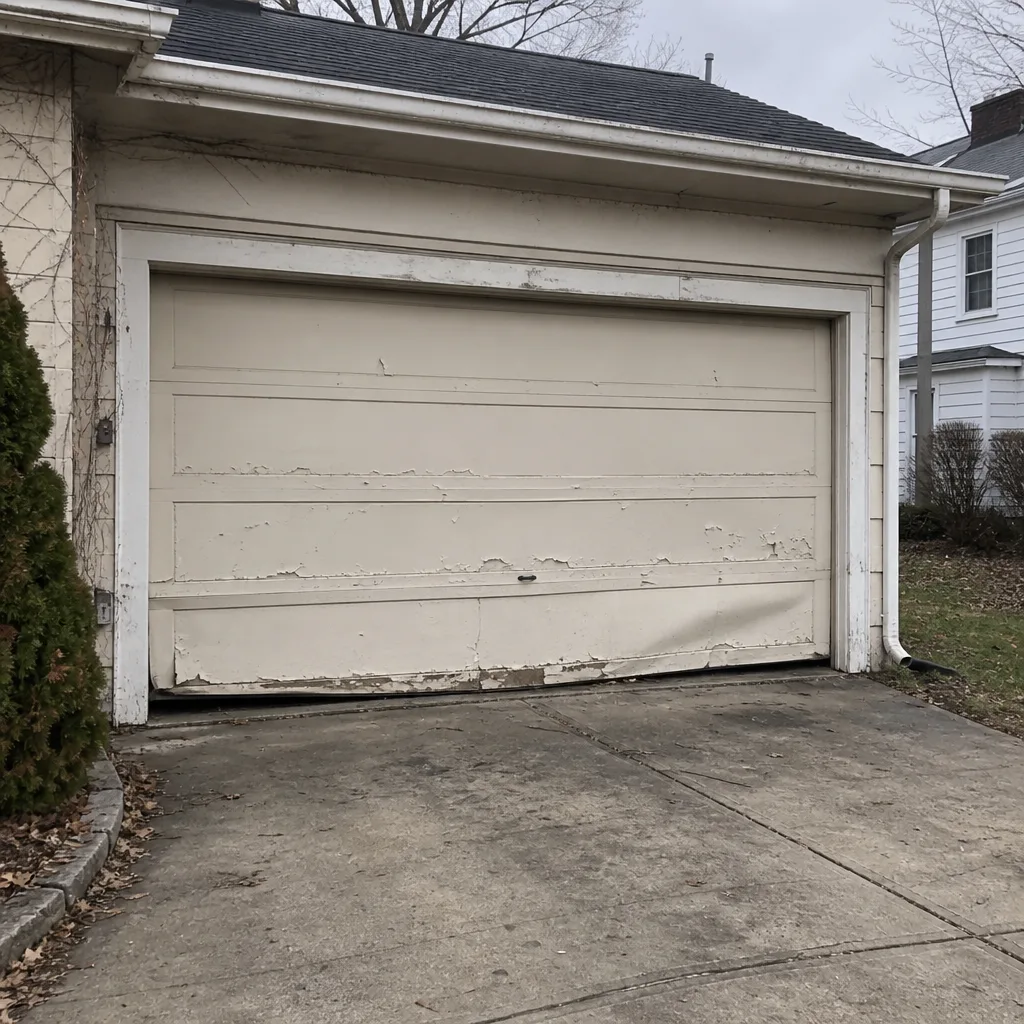 Before
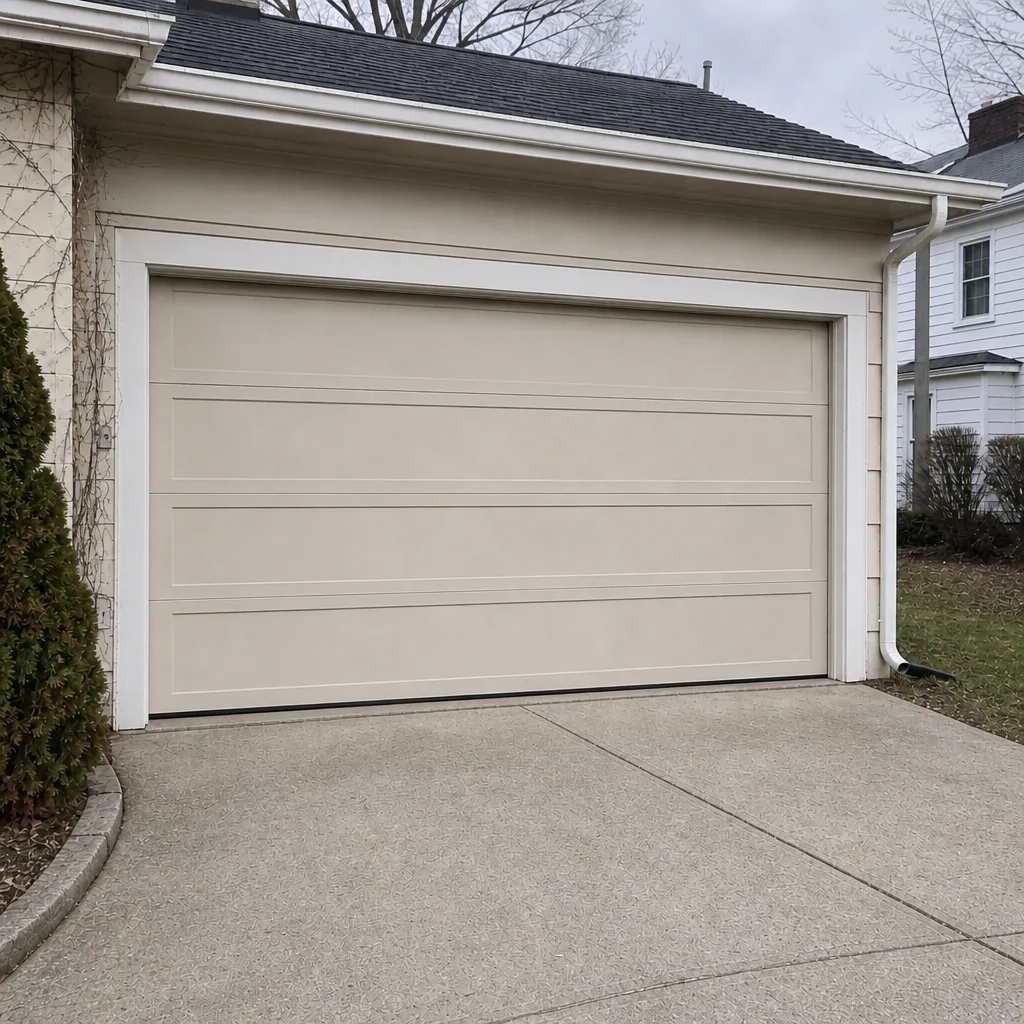 After
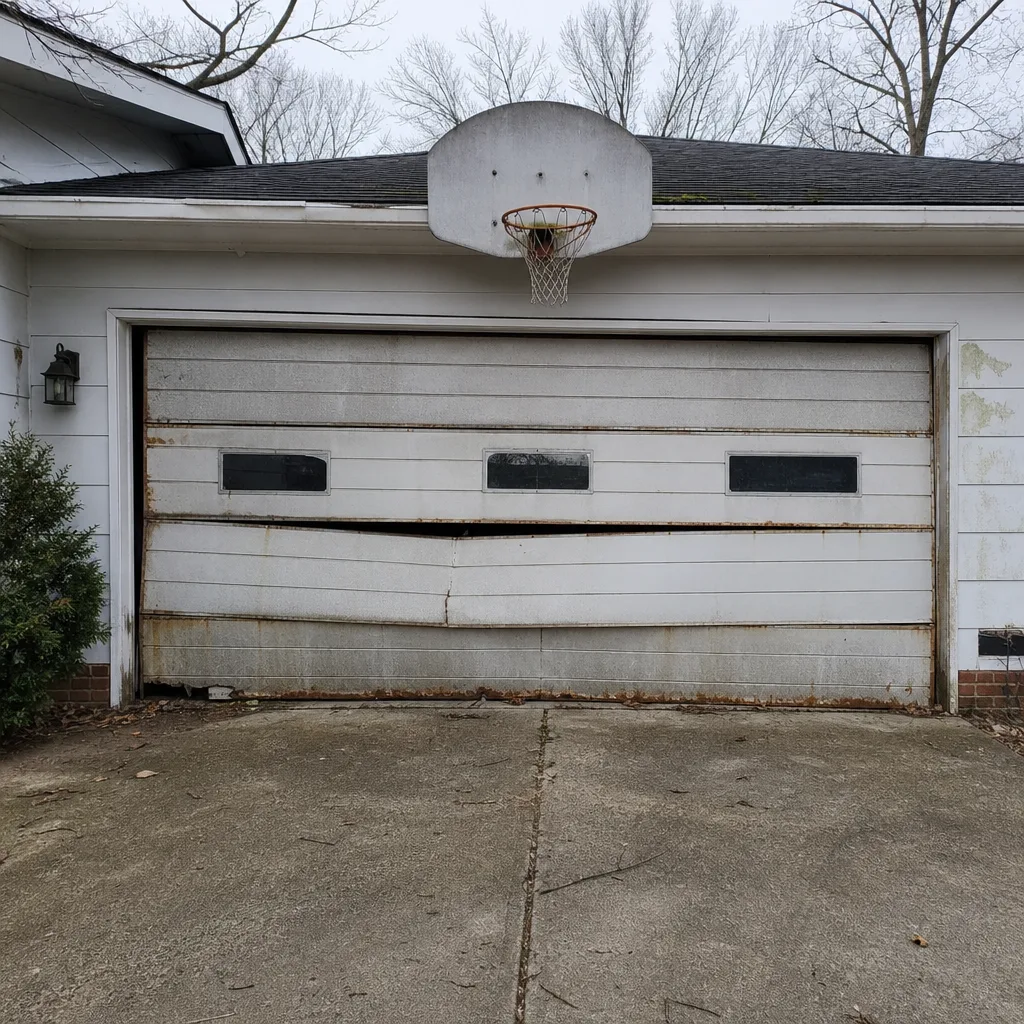 Before
 After
 Before
 After
When to Call a Professional
Some things are worth a look; some are worth a call. Call us if you see a frayed or bird-caged cable, a bottom bracket pulling away from the jamb, a visible gap in a torsion spring coil, or a door that won’t open evenly. Call if the opener shows a repeating flashing pattern you can’t identify, if the door has stopped mid-travel more than once, or if you notice water coming in under the door after rain. If the door is bowed, binding, or has a panel that’s absorbed water, that’s worth a professional assessment before it gets worse.
Garage Door Repair Meridian-Kessler offers free estimates in Meridian-Kessler – call (877) 792-5753. We answer 24/7, with fast dispatch from 7am to 7pm, Sunday through Friday. Our technicians have up to 13 years of experience, and every visit begins with a written estimate that sets the final price before any work starts.
Frequently Asked Questions
A frayed or separating cable at the drum is the one we see missed most often, because it’s a detail above eye level that only shows itself when the door is closed and you’re looking up at the winding drum. Strand separation and bird-caging are visible for days or weeks before a cable lets go, and a bottom bracket that’s pulling loose is the other sign worth checking every few months.
Watch the door as it starts to move. If it lifts faster on one side and settles crooked, it’s almost always a spring, because one side has lost its counterbalance. If the door runs straight but the gap at the floor is uneven, that’s usually a seal, panel, or floor issue rather than a track problem.
The flashing pattern reports a specific fault: rapid flashes usually mean a safety sensor issue, slower or longer sequences usually point to a force limit, travel limit, or motor fault. The exact code depends on the model, so note the model number and the flash pattern and mention both when you call. We service Chamberlain, LiftMaster, Genie, and Craftsman openers, among others, so we’ll know what the pattern means.
A door that’s slowing down is usually experiencing mechanical drag, not an opener failure. The opener compensates by pushing harder, so the slowdown is often the first visible clue that a roller, hinge, track, or spring needs attention. Left alone, the drag eventually trips the opener’s safety reversal and the door stops mid-travel.
Cost depends on what’s wrong and which parts are involved, and the written estimate sets the final price before work starts. We give a free estimate so you know the number in advance. Spring, cable, and opener repairs are priced per job based on the actual parts and labor required, not a flat rate. Call (877) 792-5753 for an exact quote – estimates are free.
No, leave it closed and call. A frayed cable, a loose bottom bracket, or a visible gap in a spring coil means the component is already compromised, and continued operation risks a sudden failure. Springs and cables are high-tension parts, so this is work for a trained technician, not a homeowner or a general handyman.
The Bottom Line
Garage door failures almost never arrive without warning. They announce themselves first as visual tells: worn strands at the cable drum, a bracket pulling loose, an uneven bottom edge, a blinking diagnostic light, a flattened seal. In Meridian-Kessler’s older housing stock, those signs are easy to catch if you know where to look, and a ten-minute check twice a year will catch most of them while the repair is still small. When you see something, don’t wait for a noise. And when it’s a spring or cable, don’t touch it. Call a specialist who handles the whole system, from the door and opener to the parts and the spring repair, and get it fixed right the first time.
Call (877) 792-5753 for a free estimate. We answer 24/7. Fast dispatch from 7am to 7pm, Sunday through Friday. Garage Door Repair Meridian-Kessler handles the brand you already have, with parts on hand rather than on order.
Written by the team at Garage Door Repair Meridian-Kessler.