
Last updated November 20, 2026
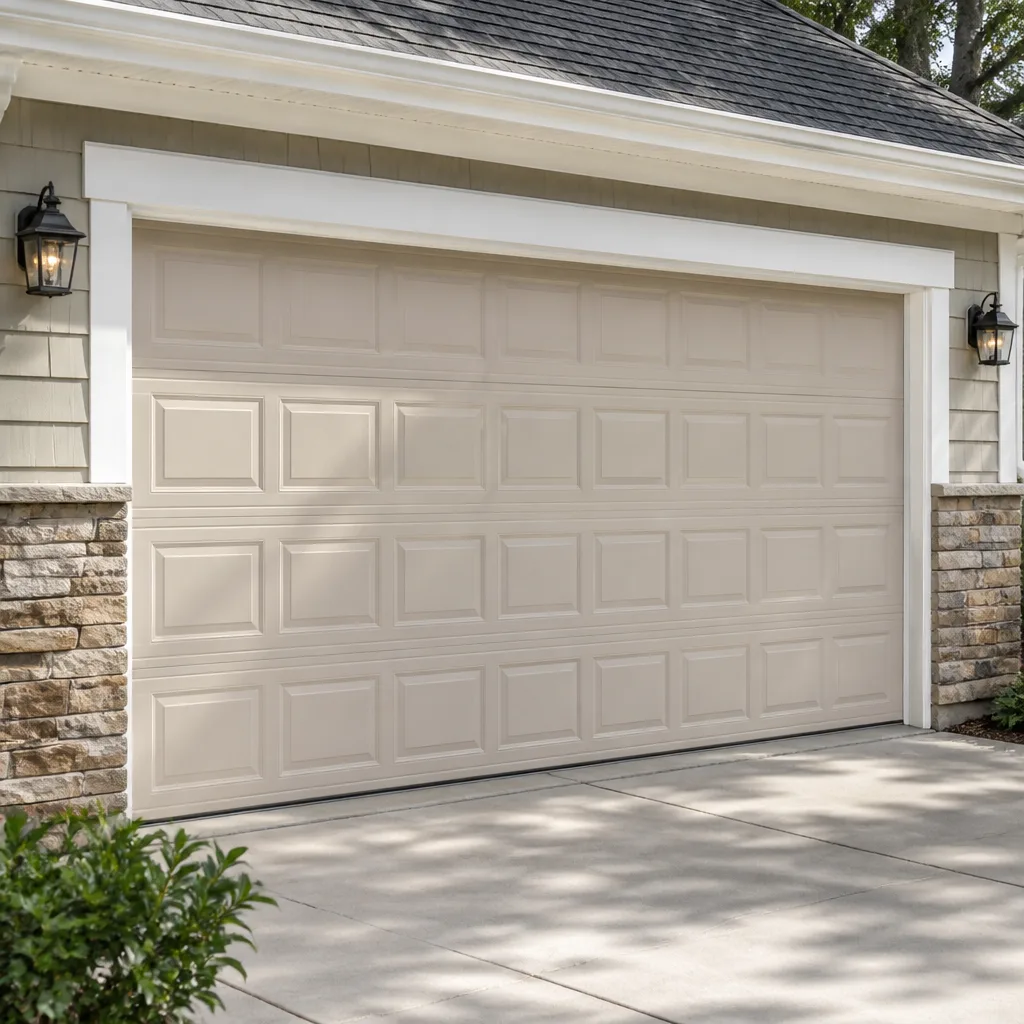 Raised-panel steel
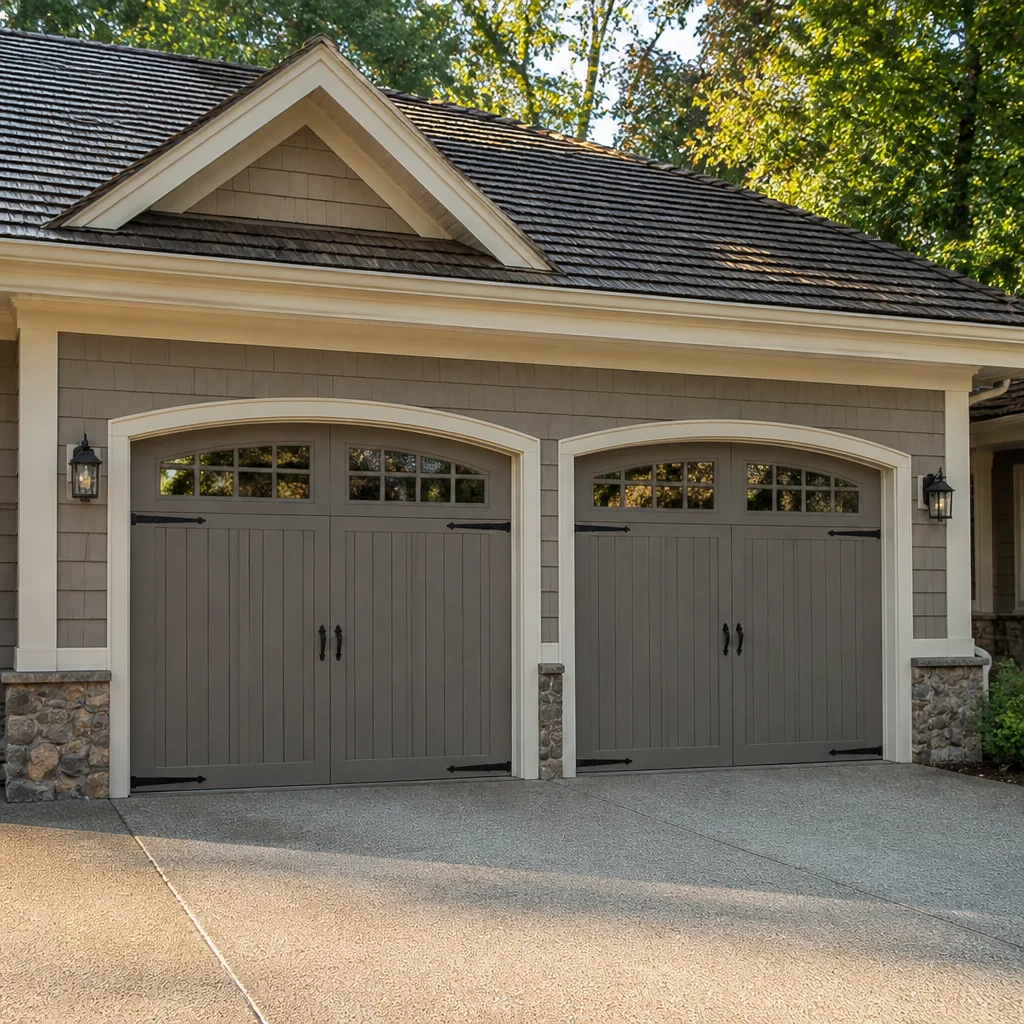 Carriage house
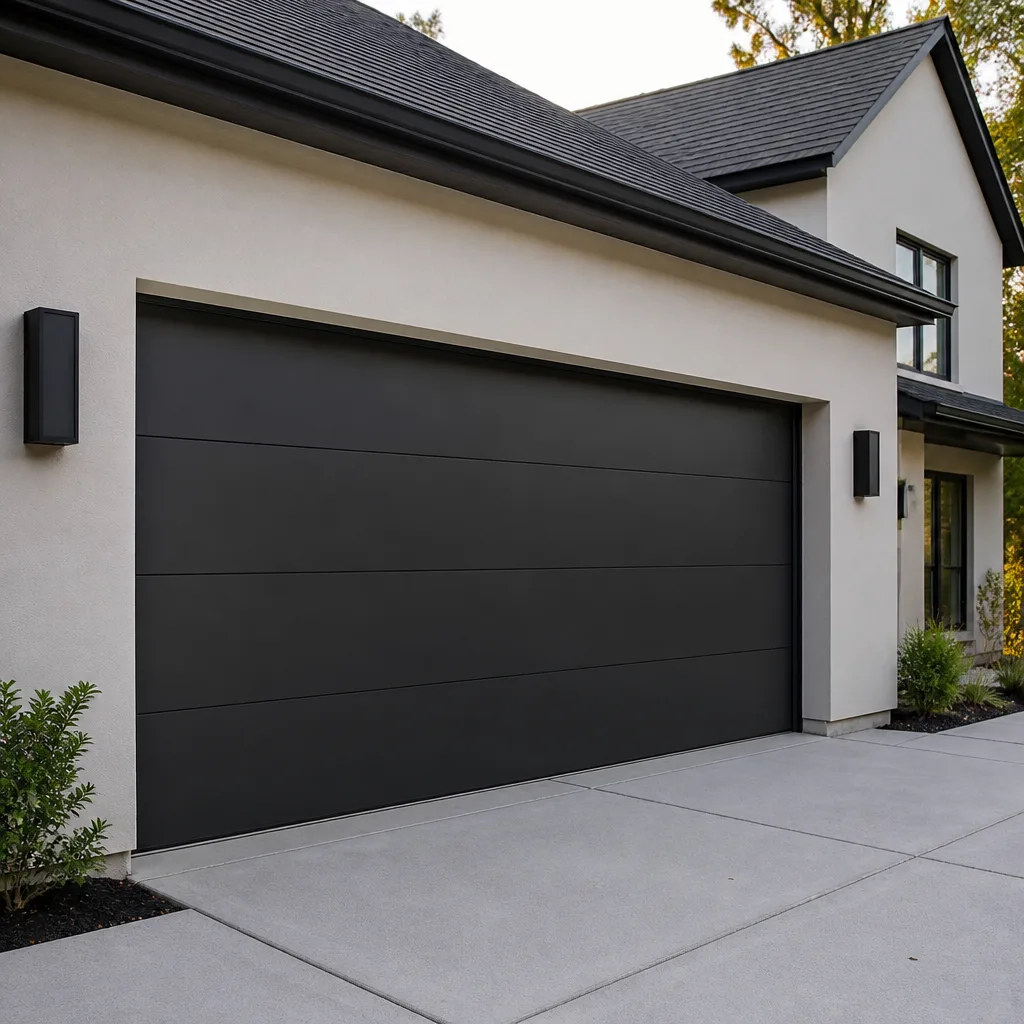 Modern flush
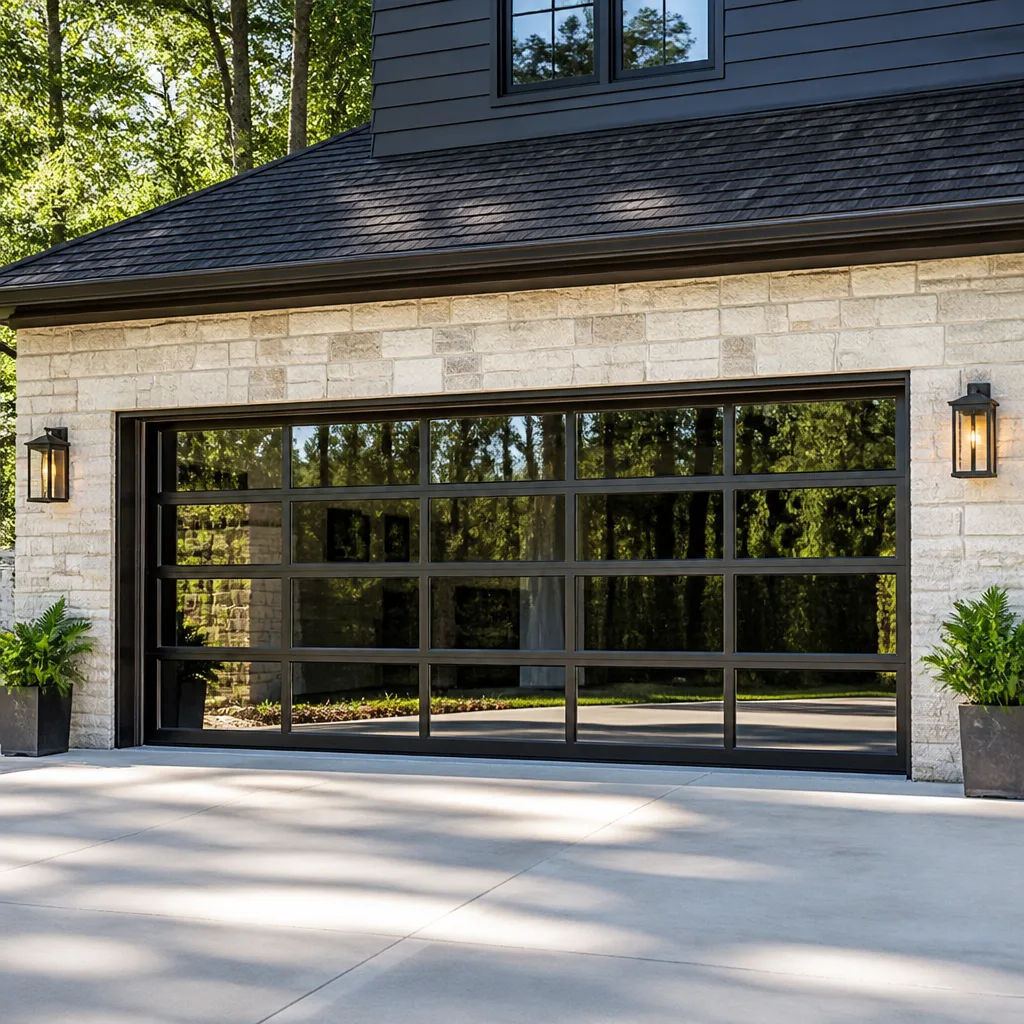 Full-view glass
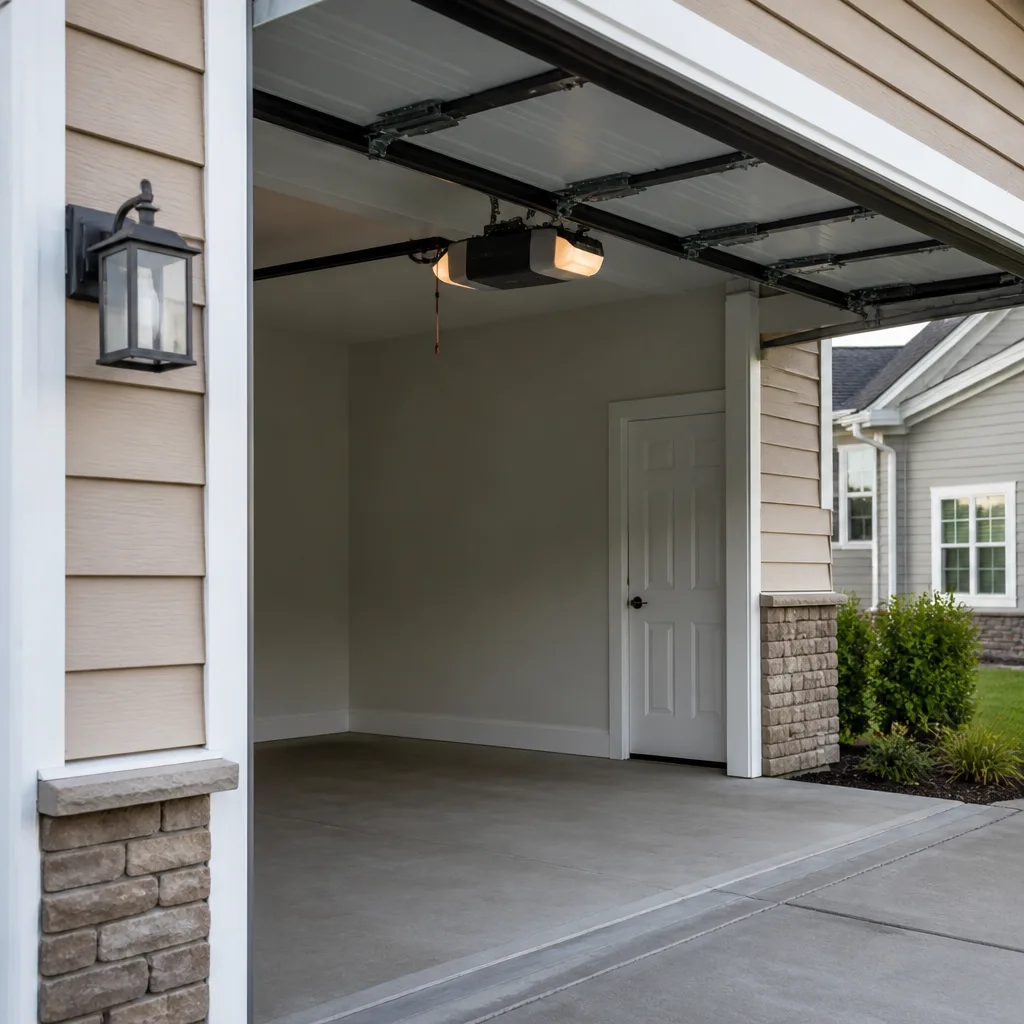 LiftMaster openers
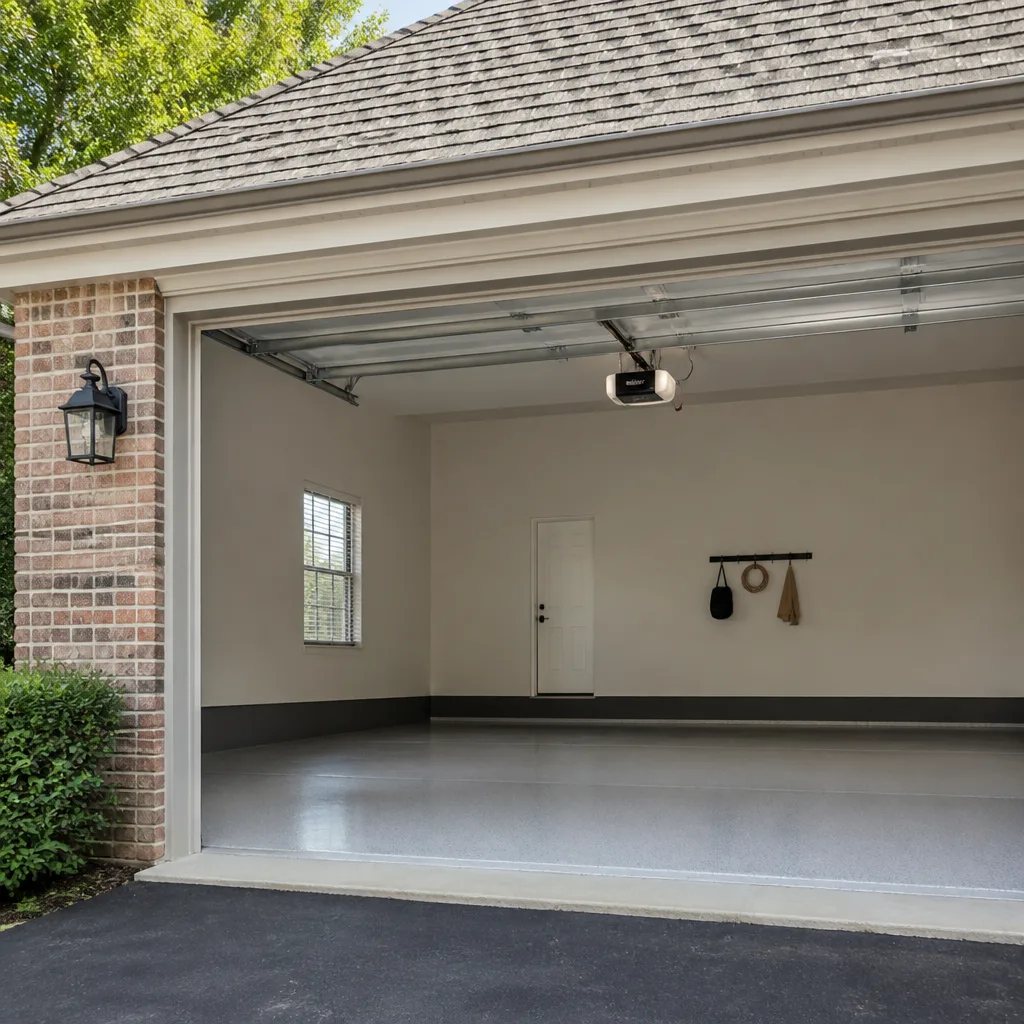 Chamberlain openers
Full 25-point door and opener safety check with every visit - springs, cables, rollers, tracks, and your LiftMaster or Chamberlain opener included
You get a price before we start. It does not change when the pro arrives.
Get your free estimateThe Complete Guide to Garage Doors in Meridian-Kessler
Most Meridian-Kessler garages were built for a 1938 Ford, not a 2024 F-150. That matters more than any style decision you’ll make, because the first constraint every homeowner here runs into is the opening itself: often 8 feet wide and 6-foot-6 tall, framed into a narrow detached brick garage that was never designed around a modern vehicle. Springs, openers, and panel profiles all trace back to that single fact. This guide maps every choice in front of you – door size, material, opener type, spring system, parts availability – to the actual housing stock of Meridian-Kessler, so you can plan a repair or replacement that fits the building you own rather than a showroom floor.
Quick Answer
Garage door work in Meridian-Kessler almost always starts with measuring the existing opening, because the neighborhood’s 1920s-to-1940s detached garages rarely accept a standard 9×7 door without header modification. From there, the right door material, opener, and spring setup depend on whether the garage is attached or detached, insulated or not, and how much headroom the ceiling allows. Get the measurement and the structure right first, and everything else follows.
Styles & brands we work with
- Raised-panel steel
- Carriage house
- Modern flush
- Full-view glass
- LiftMaster openers
- Chamberlain openers
Table of Contents
- What Meridian-Kessler’s Garage Stock Actually Looks Like
- Sizing a Replacement Door for a Narrow Legacy Opening
- Materials and Styles That Match 1930s Brick
- Springs in an Indianapolis Freeze-Thaw Climate
- Choosing an Opener for an Attached or Detached Garage
- The Eight Brands You Probably Already Own
- Specialist vs. Generalist: Why Diagnosis Matters
- What Garage Door Work Costs in Meridian-Kessler
What Meridian-Kessler’s Garage Stock Actually Looks Like
Meridian-Kessler is a streetcar-era neighborhood, and its garages carry the fingerprints of that era. A large share of them are detached, single-car structures set behind the house at the end of a narrow drive, built from the same brick as the main home and finished with a flat or low-pitch roof. Many were added later than the house itself, which is why the opening dimensions vary so much from block to block. Two garages of similar age on the same street can differ by several inches in width, height, and ceiling clearance.
Those structural details change what’s possible:
- Detached garages are usually unheated and uninsulated, so the door and springs see the full range of Indianapolis weather. An uninsulated door panel with a steel skin and no backing will sweat in humid months and feel icy in January, and the springs above it weather faster.
- Attached garages tie into the house’s thermal envelope. If the garage shares a wall or a ceiling with living space, door insulation and a properly sealed bottom edge matter for comfort and for keeping car exhaust and cold air out of the house.
- Low-pitch and flat roofs mean low headroom in many MK garages. That’s often the single biggest obstacle to installing a standard torsion spring and a conventional track setup.
- Narrow driveways push homeowners toward single-car doors and tight clearances, which in turn affects which openers fit and how the door tracks can be mounted.
None of this is unusual for an older neighborhood, but it does mean a generic “standard garage door” guide will mislead you. The building comes first.
Sizing a Replacement Door for a Narrow Legacy Opening
The most common mistake in Meridian-Kessler is assuming a stock 9×7 door will drop into an existing opening. It usually won’t. Many of these garages were framed around a single early automobile and an 8-foot-wide, 6-foot-6 or 7-foot-tall opening. A 9×7 door simply doesn’t fit that hole without changing the hole.
Here’s the general order of work for a replacement door on a legacy opening:
- Measure the rough opening at the widest and tallest points, and check the opening for square. Older brick and wood framing can be out of plumb by an inch or more.
- Check headroom from the top of the opening to the ceiling, and check the side clearance on each side. Standard torsion setups need more headroom than low-headroom setups do.
- Decide whether to modify the header or work within the existing opening. Widening to 9 feet means cutting and reframing the header above the opening; sometimes that’s straightforward, sometimes the brick and structure make it a bigger job than it looks.
- Choose a low-headroom bracket kit if the ceiling is close to the opening. Low-headroom kits reposition the torsion assembly and tracks so the door can still operate with minimal clearance above. They solve clearance, not width.
- Order a door to the actual opening, not to a nominal size. Custom-width doors are routine; they’re not a premium bespoke product.
The key distinction: low-headroom kits fix vertical clearance, and header modification fixes width and height. Conflating the two is how replacement projects stall. For the full process on a replacement from measurement to finished installation, see garage door installation.
Materials and Styles That Match 1930s Brick
Walk any residential street in Meridian-Kessler and you’ll see the same pattern: carriage-house style doors, panel profiles that echo the home’s brick detailing, and a color palette that leans toward warm neutrals, deep greens, and blacks. Homeowners here care about the streetscape, and a modern full-view aluminum door with frosted glass can look misplaced against a red-brick Tudor or a 1930s Colonial.
Steel is the practical answer for most of these garages, and a steel carriage-house door is the sweet spot. It gives you the raised-panel or cross-buck look that fits the architecture without the maintenance of a wood door. Solid wood doors are available and genuinely beautiful on the right house, but in an uninsulated detached garage in an Indianapolis climate, wood moves, needs refinishing, and can warp with seasonal moisture swings. Fiberglass and aluminum frames are options on some homes, but steel remains the most common choice for its balance of weight, weather behavior, and cost.
Matching the panel profile to the house matters, and it doesn’t require a custom door. Standard raised-panel and carriage-house designs come in profiles that read as period-appropriate next to 1930s brick. A short-panel door often suits a low-pitch garage better than a long-panel door, because the proportions stay balanced when the opening is short.
The three things that actually drive the price of a door like this are width, insulation value, and whether the door needs custom sizing. A stock size in a common color with standard insulation sits at the lower end; a custom-width or unusually tall door moves up. Brand rarely changes the look – garage door repair and replacement are commonly handled across many manufacturers.
Springs in an Indianapolis Freeze-Thaw Climate
Torsion and extension springs are the most safety-critical part of any garage door. They carry the full weight of the door, and they’re under high tension. We flag that clearly because spring work is where generalists get hurt. This section explains how springs behave in this climate; it is not a DIY instruction, and spring replacement belongs with a trained technician using the right tooling.
Indianapolis’s freeze-thaw cycle is the specific thing to understand here. In Meridian-Kessler, most detached garages are unheated, uninsulated structures, so springs sit through a full range of temperatures and humidity swings every year. That cycling stresses the steel. The practical consequences:
- Springs in exposed, unheated garages tend to fail sooner than springs in a conditioned attached garage. The door weight can also vary with seasonal temperature changes, which shows up as a door that feels heavier or slower in January.
- Wire gauge matters on cold-climate installs, but the gauge has to be matched to the door’s weight, its height, and how often it cycles – not just to the climate. A trained technician selects the cycle rating and wire size based on the door and the garage, not a generic rule of thumb.
- Matched pairs should be replaced together, not one at a time. A new spring alongside a worn one will lose balance and fail early, so a pair is the standard replacement.
- Extension spring setups show up in some older garages and need safe containment if the spring fails. Torsion is the more common upgrade for a legacy door, but that’s a job for a specialist.
If you hear a loud bang from the garage and the door won’t lift, the spring has likely failed. That’s a case for a specialist, not a ladder. Call (877) 792-5753 and we can get a free estimate on a proper spring replacement.
Choosing an Opener for an Attached or Detached Garage
The opener question in Meridian-Kessler comes down to two things: whether the garage is attached to the house, and how much headroom the ceiling gives you. A standard belt-drive opener and a low-headroom opener solve different problems.
Attached garage: If the garage shares a wall or ceiling with living space, noise and safety become more important. A belt-drive opener is quieter than a chain-drive, and safety-reversing features are non-negotiable for anything on the house’s envelope. Insulated doors plus a quiet opener make an attached garage much more pleasant next to a bedroom.
Detached garage: Noise is less of an issue, and the door often faces the alley or the back of the property. A chain-drive opener is fine and generally the more affordable choice. What matters more in a detached MK garage is whether the opener can be securely mounted in a low-ceiling or low-pitch structure, and whether the door will still operate manually when power is out – something that comes up more often than people expect.
Like a car, an opener has a lifespan and repair is often better than replacement. A noisy, slow, or non-responsive opener is not always a dead opener; sometimes the door’s balance or a broken spring is the actual problem. Our garage door opener repair work starts with diagnosing the door before blaming the motor. LiftMaster and Chamberlain are among the most common units in this neighborhood, and both are well-supported for repair.
When the door and opener both need attention, one visit can address both. For a full repair engagement on a Meridian-Kessler garage, see Garage Door Repair Meridian-Kessler.
The Eight Brands You Probably Already Own
The practical relief in this section is that you probably don’t need to change brands to get service. We work on the brand you already have. That means you’re unlikely to hear “we don’t work on that model” from us, and it means parts sourcing isn’t guesswork.
The eight brands most widely installed in Meridian-Kessler homes and across Indianapolis are:
- LiftMaster
- Chamberlain
- Genie
- Clopay
- Amarr
- Wayne Dalton
- Craftsman
- Raynor
Here’s how the brand question actually plays out for parts:
- On hand: common springs, rollers, hinges, opener gears, and standard brackets for the widely installed brands above.
- Special order: custom-panel profiles, obsolete opener logic boards, and OEM remotes for discontinued models. These are sourced through the manufacturer, so timelines vary by brand and model.
- Worth checking first: a broken cable, a snapped spring, or a misadjusted travel limit is often the real culprit, and none of those depends on the brand. A specialist can diagnose the actual failure and, if a model-specific part is needed, identify it precisely rather than guessing.
One spot where brand coverage matters in this neighborhood: Craftsman and Raynor openers and doors from earlier decades are still in service in a lot of Meridian-Kessler garages, and they’re frequently misdiagnosed by generalists. A specialist who already knows your brand saves you a wasted visit.
Specialist vs. Generalist: Why Diagnosis Matters
This is the section that changes what you pay for a repair. A general handyman service is often the first call for a stuck door, and it’s an understandable choice. The problem is that a handyman’s experience is spread across a dozen categories, and garage door failures don’t always announce themselves in the obvious place.
The most common misdiagnosis we see is a cable drum issue called an opener failure. The symptom – a door that won’t close properly or that binds on one side – looks like a bad motor. In reality, a slack or jumped cable can make the opener work against resistance, trip its safety limits, or burn a gear. Replacing the opener without fixing the cable is both a wasted part and an unsafe door. A specialist inspects the full system – springs, cables, drums, tracks, rollers, and opener – because garage doors are all we do.
Here’s a simple decision list for when to call a specialist versus a generalist:
- Call a specialist if you hear a bang, the door is heavy, the door binds on one side, a cable looks slack or frayed, or the door won’t stay in the up position. These are tension and balance issues.
- Call a specialist if you’re unsure whether the door or the opener is at fault. Diagnosis is where specialty pays for itself.
- Call a specialist if a part needs to be sourced for a specific brand. Sourcing through a single-trade specialist avoids shipping delays and wrong-part returns.
- A generalist is fine for cosmetic concerns that don’t involve tension, cables, or opener logic – a rattlng panel or a cosmetic scuff, for example.
- Call us when you want one call to cover the whole system. We handle spring repair, cable work, opener repair, panel replacement, installation, and parts, so you don’t have to coordinate between trades.
What Garage Door Work Costs in Meridian-Kessler
Costs vary with the door size, the brand, the material, and how much modification the legacy opening needs. We don’t publish a single number, because a door that fits the opening and a door that requires header work are different jobs. What we can tell you is how the estimate is structured and what to ask so you can compare.
Use this table as a checklist when you request an estimate:
- Standard-sized door replacement – includes removing the old door, installing the new one, and testing the balance and safety settings.
- Custom-width or low-headroom install – includes any necessary modification to the opening, the low-headroom brackets, and new tracks.
- Spring replacement – usually a pair, matched, with the correct wire and cycle rating for your door.
- Opener replacement or repair – depends on whether the motor, the safety system, or the door’s balance is the actual failure.
- Panel and parts repair – priced by the part, with stock parts available without a shipping wait.
- Insulation and bottom seal upgrades – often the difference between an attached garage that stays dry and one that doesn’t.
The one thing every job has in common: the price is quoted and agreed in writing before any work begins. There’s no changing price once the door’s been inspected. We give the estimate up front, and we’re happy to go through it line by line so there’s no surprise at the end.
For an exact quote on a Meridian-Kessler door, call (877) 792-5753. The estimate is free.
Common Mistakes to Avoid
- Assuming a standard door will fit. MK’s legacy garages often have 8-foot-wide openings that won’t accept a 9×7 door without header work. Measure the actual opening before ordering or budgeting.
- Replacing one spring of a pair. Matched springs are designed to work together; a new spring next to a worn one will unbalance the door and fail early. Replace the pair.
- Blaming the opener for a door problem. A binding door, a slack cable, or a broken spring can all look like a dead motor. Diagnose the door before replacing the opener.
- Skipping the low-headroom check. A flat or low-pitch garage roof means limited clearance above the door. Low-headroom kits solve clearance and standard tracks don’t; skipping the check stalls the install.
- Picking a door for the catalog instead of the house. Full-view aluminum looks out of place against 1930s brick. A steel carriage-house door usually matches the architecture without custom pricing.
- Waiting on third-party parts when a fix is available. A common spring or bracket can be on the door in hours if it’s in stock; special-ordering when you don’t need to is a common delay.
- Ignoring an unheated garage when choosing an insulated door. An insulated door in a detached garage still helps with temperature swings, but the garage needs a sealed bottom edge to make the insulation meaningful.
See the difference
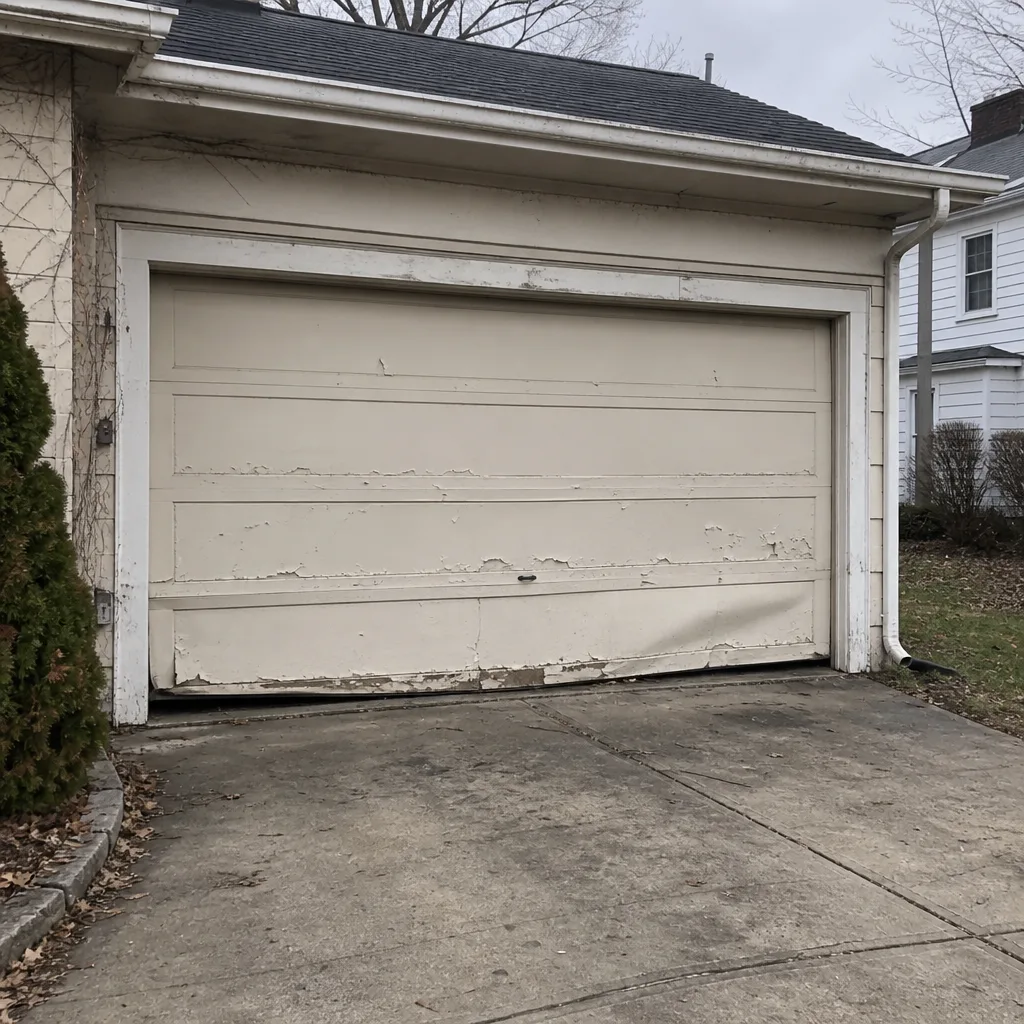 Before
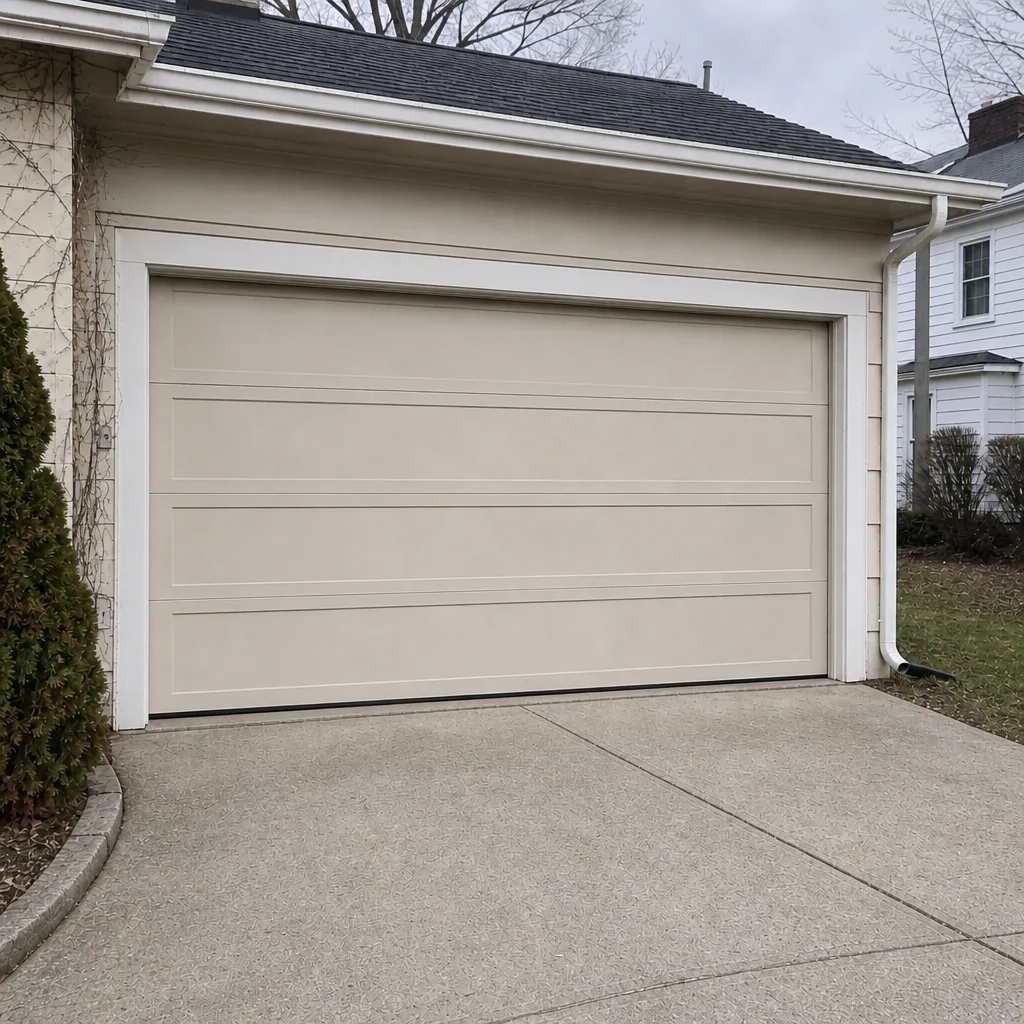 After
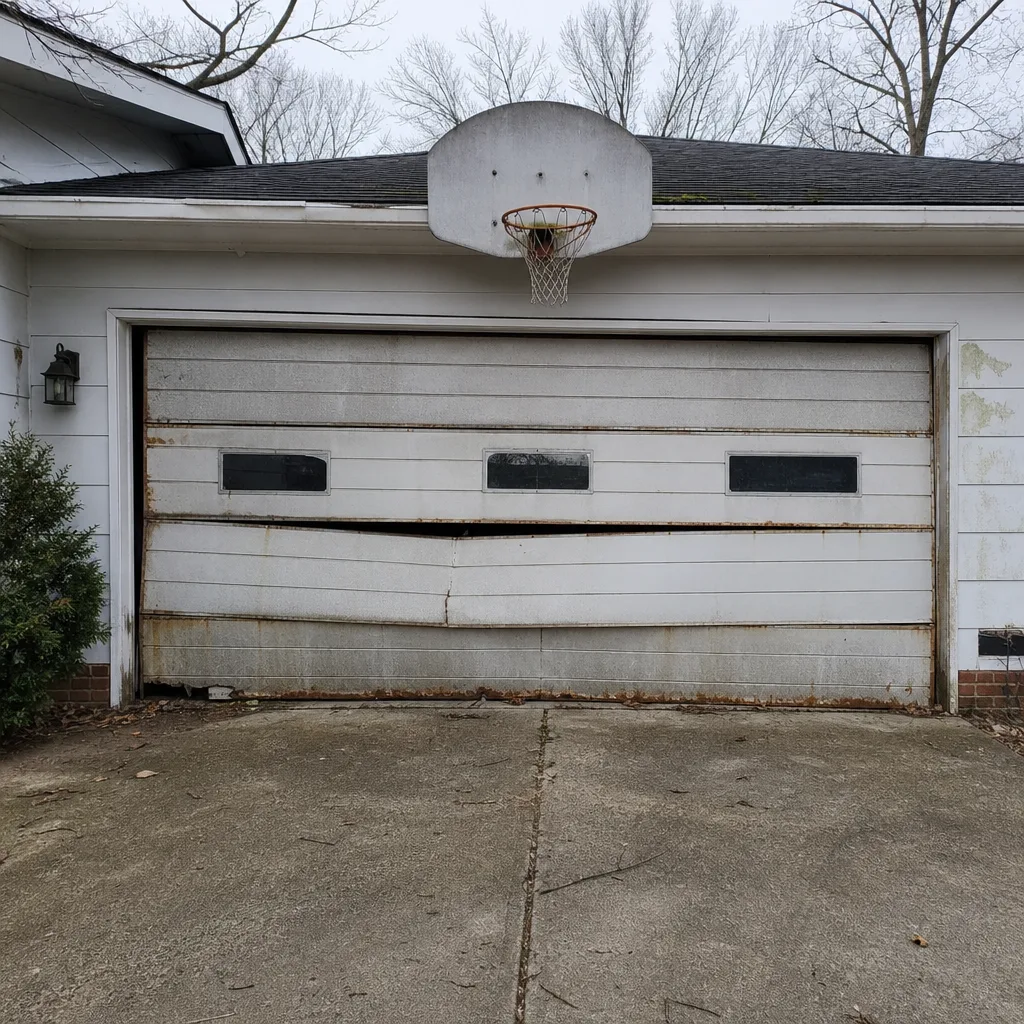 Before
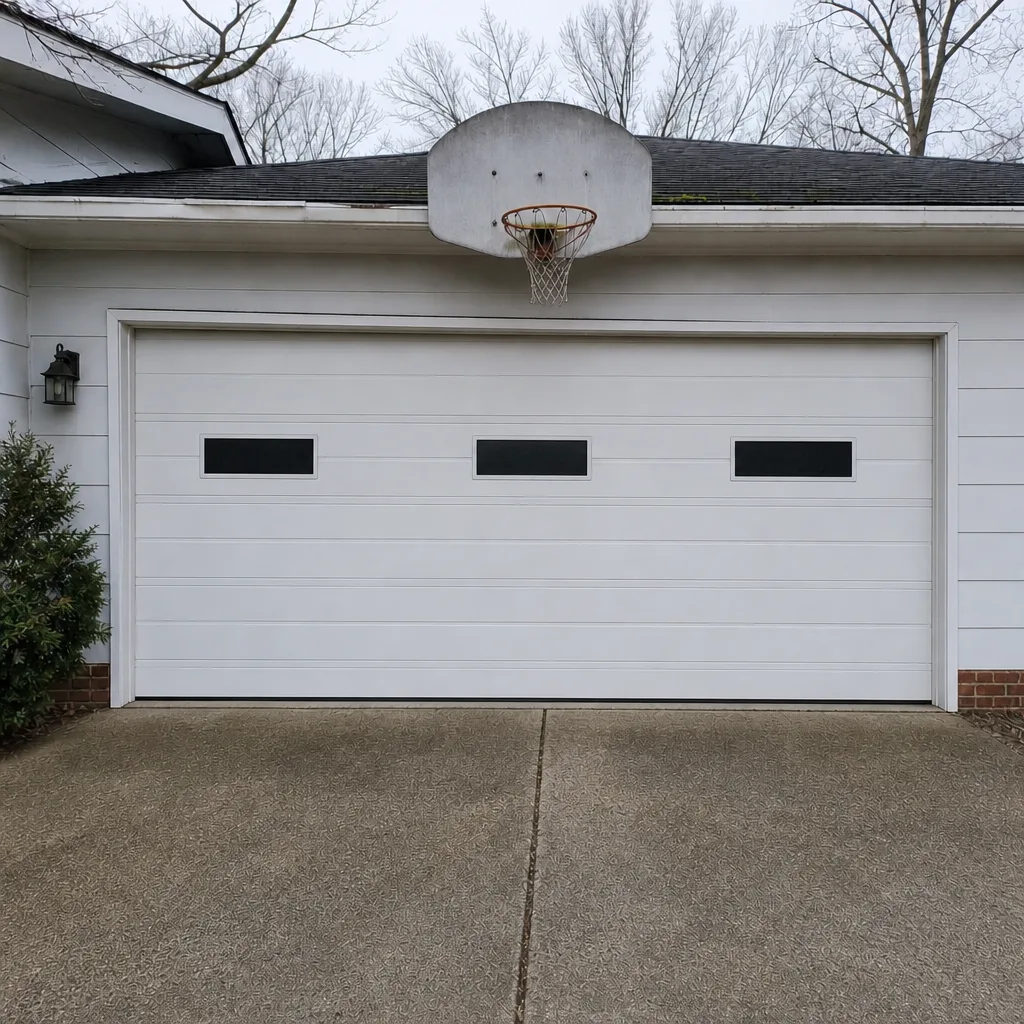 After
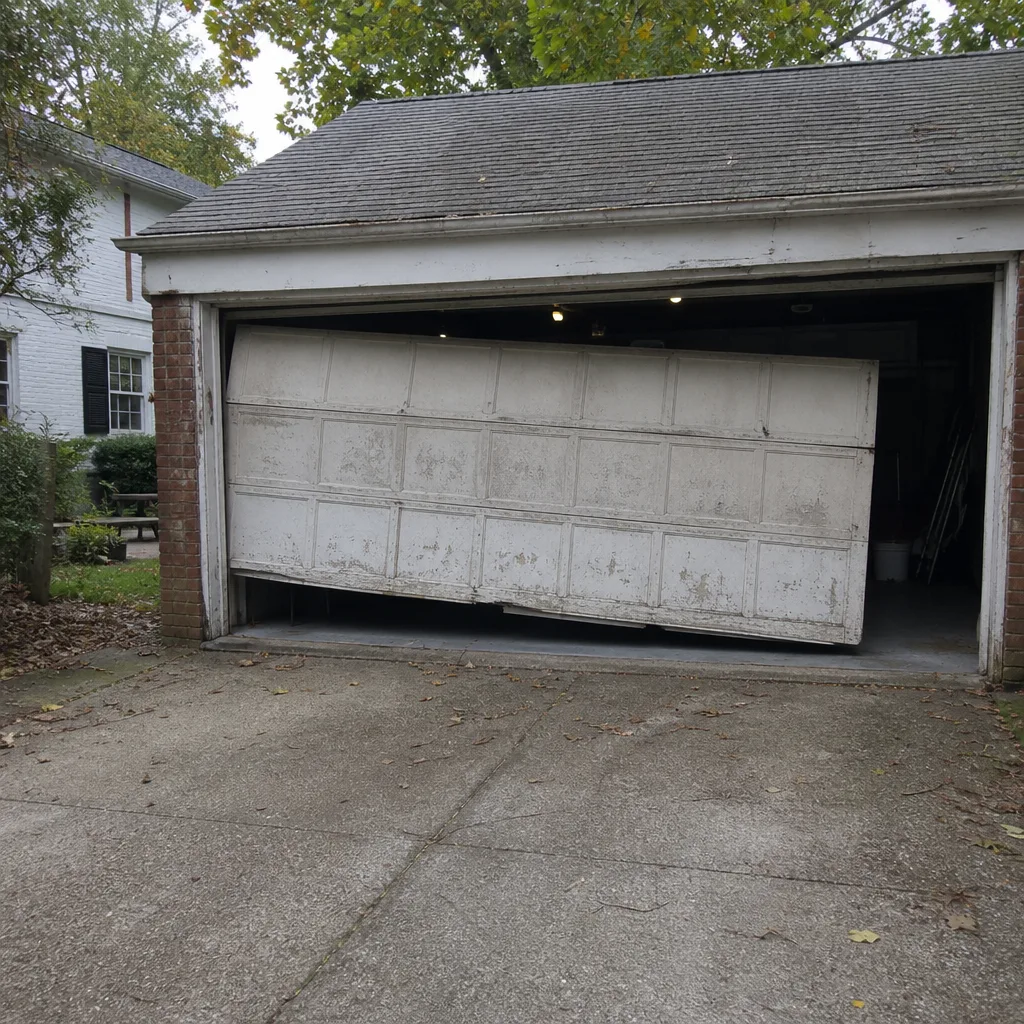 Before
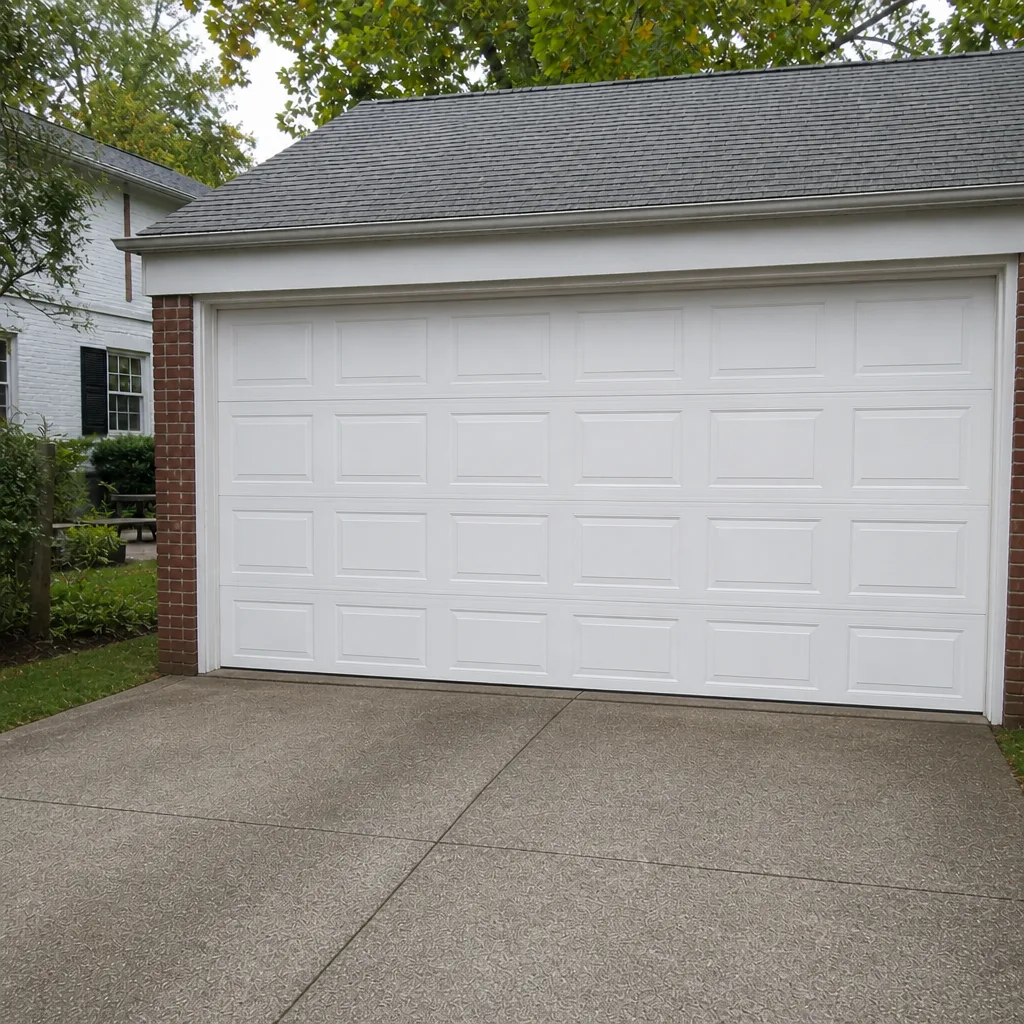 After
When to Call a Professional
Call a professional when the issue involves tension, balance, or the door’s movement. That means a spring that has failed, a door that’s too heavy to lift, a door that binds on one side, a cable that looks slack or frayed, or a door that won’t stay in the up position. These are the situations that injure homeowners who try to fix them, and a garage door specialist handles them with the right tooling. Also call when the door and the opener are both suspect, because correct diagnosis saves you a wasted opener replacement. Beyond repair, call for a replacement estimate – especially if the opening is a legacy size or the ceiling is low. Garage Door Repair Meridian-Kessler offers free estimates in Meridian-Kessler, and our team has up to 13 years of experience across the eight major brands. Call (877) 792-5753. We answer 24/7. Fast dispatch from 7am to 7pm, Sunday through Friday.
Frequently Asked Questions
Most Meridian-Kessler garages need a door sized to the actual opening, and many are around 8 feet wide rather than the standard 9 feet. The opening should be measured before ordering a door, and if it’s a legacy width, expect to decide between a custom-width door and modifying the header. Call (877) 792-5753 for a free estimate – we’ll measure the opening and tell you which route fits your garage.
There’s no single price, because the cost depends on whether the issue is a spring, a cable, an opener, or the door itself, and how much modification the opening needs. The written estimate sets the final price, and the price is quoted and agreed before any work starts. Call (877) 792-5753 for a free estimate.
Many repairs can be scheduled the same day, especially when the part is one we stock. Springs, rollers, and standard opener parts are the usual same-day repairs, while a special-order part for a discontinued model takes longer. We answer 24/7. A call outside dispatch hours is booked into the next opening, Sunday through Friday, 7am to 7pm.
In Meridian-Kessler, the main cause is the freeze-thaw cycle in unheated detached garages. Springs that see a wide temperature and humidity swing all year wear faster than springs in a conditioned garage, and door weight can feel heavier in cold months. Spring replacement is a tension job for a specialist; call (877) 792-5753 for a free estimate.
Yes. We service the eight brands most commonly installed in Meridian-Kessler homes – LiftMaster, Chamberlain, Genie, Clopay, Amarr, Wayne Dalton, Craftsman, and Raynor. That means you’re unlikely to hear “we don’t work on that model.” Call (877) 792-5753 and tell us the brand and model, and we’ll confirm coverage.
A specialist does garage door work exclusively, so diagnosis, springs, cables, and opener logic are all within their day-to-day. A handyman’s experience is spread across many categories and often misses a cable drum issue that presents like an opener failure. Springs are under high tension, so the safety margin is another reason to use a specialist. Call (877) 792-5753 for a free estimate.
The Bottom Line
The order of decisions in a Meridian-Kessler garage is measure first, then material, then springs, then opener. The neighborhood’s 1920s-to-1940s detached garages set constraints that standard guides ignore – opening width, ceiling clearance, and an unheated structure that changes how springs age. Get those constraints right and a steel carriage-house door matched to your brick, a correctly sized torsion spring, and an opener chosen for the garage’s actual clearance will serve you well. If the door is heavy, binding, or making a noise it didn’t make last week, stop and call (877) 792-5753 for a free estimate. We answer 24/7. Fast dispatch from 7am to 7pm, Sunday through Friday.
Written by the team at Garage Door Repair Meridian-Kessler.